
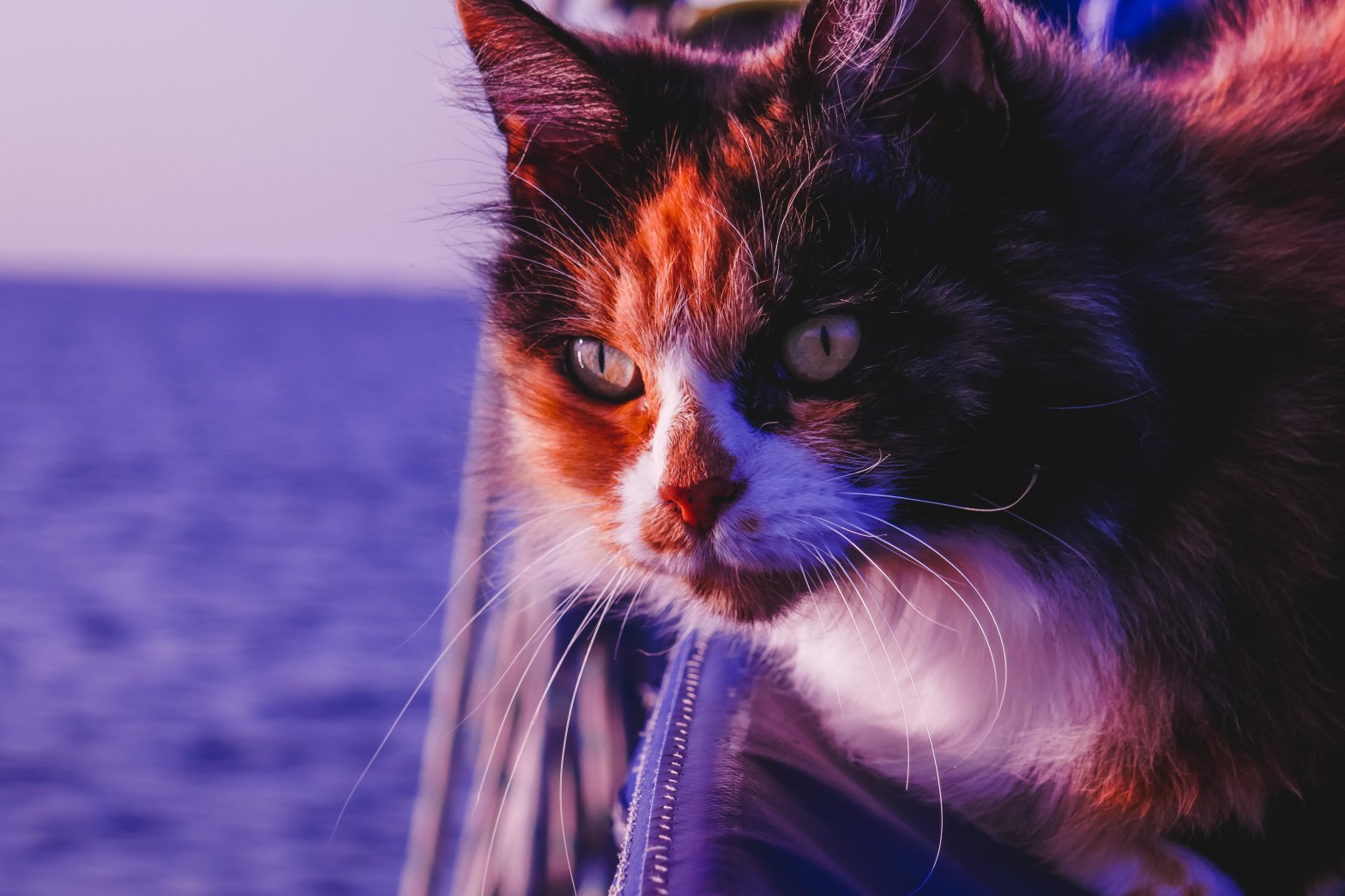
Sailing with cats can be a fun and exciting experience. If you are planning to take your furry friends on a sailing trip, there are a few things to keep in mind to make sure everyone stays safe and happy.
Our two little pirates
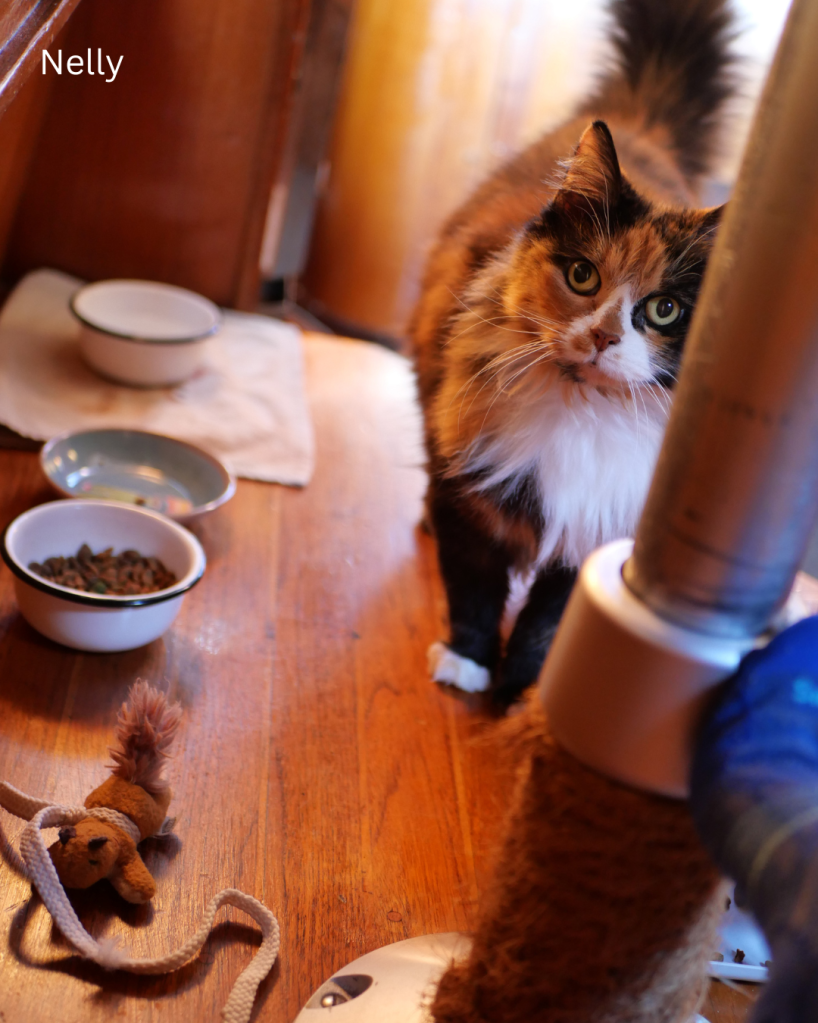
Let me introduce you to Nelly and Finn, our two cats who sail with us on El Burro.
Nelly, the experienced sailor, has been with us on the boat since 2016. She’s the oldest and knows the boat inside out. The gentle rocking of the waves doesn’t bother her any more, but thunderstorms still send her scurrying for cover.
Finn is the newest member of our sailing crew. He’s young, playful and endlessly curious about his surroundings. Every corner of the boat is a new adventure for him, from the creak of the rigging to the splash of the waves against the hull.
Nelly may be the experienced sailor, but Finn is still finding his sea legs. He’s learning to adapt to life on the water, discovering the joys of chasing seagulls and basking in the sun on deck. Unfortunately, Finn still gets seasick from time to time, but with each passing day he grows more confident and comfortable in his new home aboard El Burro.
Together, Nelly and Finn bring a sense of joy and companionship to our sailing adventures. Whether lounging in the cockpit or taking in the view from the sprayhood, their presence reminds us that home is wherever the wind takes us, as long as we’re together.

Cosy corners
First, make sure your cats feel comfortable on the boat. It’s a good idea to give them a quiet and cosy place below deck where they can relax when the water gets choppy.
We’ve made sure Finn has a comfy spot on our boat. It’s important to us that he feels happy and safe while sailing. We’ve set up a special area just for him in a quiet corner below deck.
In Finn’s cosy corner, he has a soft bed where he can snuggle up and keep warm. We’ve placed it away from busy areas so he can have some privacy when he wants it. To make it feel like home, we’ve added his favorite blanket and toys.
The litter box
Having a litter box on your boat is really important when you’re sailing with cats. But keeping it clean and odour-free can be tricky, especially in a small space. That’s why we came up with a clever solution: we built a special cabinet with a built-in litter box which also serves as a workbench.
It’s super convenient because the litter box is tucked away in a separate room. This way, it’s easy for our cats to get to, but it’s also out of the way so it doesn’t take up too much space. We even installed a cat flap, so our cats can come and go as they please.
Having this custom-built litter box not only keeps our boat smelling nice, but it also saves space. It’s just one of the ways we make sailing with our cats easy and enjoyable for everyone involved. With two cats, we have to clean it out every day and add new litter when needed.
We love using coco coir bricks (made from coconut husks) as litter. They are affordable, highly absorbent, dust-free, lightweight, biodegradable, easy to store and contain no chemical or artificial odours. I always use baking soda or bicarbonate as a first layer.
First aid kit
Having a first aid kit for our cats on board our boat is super important. It helps us take care of them if they get hurt or sick while we’re sailing. Here’s what we keep in our cat first aid kit:
- Bandages and gauze: These are for wrapping up any cuts or injuries.
- Antiseptic wipes: These help clean wounds to prevent infections.
- Tweezers and scissors: They help us remove things like splinters or thorns from our cat’s fur.
- Tick remover & flea comb: To remove any ticks or fleas from our cats.
- Nail clipper: To cut the nails of our cats (I do this once a month or when needed).
- Worm treatment (Milbemax): To protect our cats against common intestinal worms.
- Flea treatment (Frontline): To kill adult fleas, flea eggs and larvae, and more.
- Relaxation supplements: We have WeCalm tablets aboard. We used this for our Nelly when she was travelling via plane to calm and relax her. It can also be used for situations of environmental stress, thunderstorms, fireworks, travel and undesirable behaviour. We also have a Bach Rescue Spray for cats.
- Pet Cone & Recovery suit: In case our cats get injured, to prevent them from licking, biting, pawing, scratching, or rubbing the area of their body.
- Urinary care tablets: We have tablets from Dr. Ann’s and from Organimal. It’s a dietary supplement for cats to support the bladder and urinary tract.
- Toothbrush and Toothpaste: For dental care (in case it’s needed).
- Wound Ointment (Vetramil): To support the natural recovery of the skin.
- Eye and ear wash solution: This helps us clean any debris or irritants from our cat’s eyes and ears.
- Thermometer: We use this to check if our cat has a fever.
- Anti-diarrheal medication: In case our cat gets a tummy ache while we’re sailing.
- Painkiller for cats (Metacam): Used to relieve inflammation and pain in cats.
- Health Indicator: It detects anomalies in the urine and tells us when we need to visit the vet (to be used in the cat’s litter box).
- Any medications prescribed by our vet: Along with instructions on how to give them.
We make sure to check our first aid kit regularly and refill anything that’s running low. That way, we’re always ready to take care of our cats no matter where our adventures take us.
The passport
When you sail with cats, having a pet passport is really important. It’s like their ID for traveling. It shows that they’ve had the right vaccinations and health checks. This is crucial for crossing borders between countries. Plus, if your cat gets sick or lost while sailing, the passport has all their medical info and your contact details.
When traveling with your pets, it’s crucial to get them vaccinated against rabies. Rabies is a serious disease that can be transmitted to humans through animal bites. Many countries require proof of rabies vaccination before allowing pets to enter. Make sure your pets are vaccinated at least 21 days before traveling, and keep their vaccination certificates with you. This helps protect both your pets and the people they come into contact with during your travels.
Tip: I always consult https://www.noonsite.com to check on the latest pet regulations per country.
Before setting sail
Before you start sailing, make sure you have everything your cats need like their favorite food, water, and any medications they might need. Also ensure the cosy corner is set.
It’s also a good idea to have a harness and leash handy so you can take them for walks on deck safely. We only allow our cats on deck when we’re anchored, not while sailing.
We have life jackets for our cats on the boat, but they don’t like wearing them. We got them to keep our cats safe in case something happens while we’re on the water. But, surprisingly, our cats won’t cooperate. The problem? The life jackets restrict their movement. Cats are known for being agile and quick, but the jackets make it hard for them to move freely. They feel trapped and uncomfortable.
Even though we want to keep our cats safe, we understand their feelings. Forcing them into something they hate isn’t the answer. We’ll find other ways to keep them safe onboard, like keeping a close eye on them and making sure they’re in secure areas.
Tip: Try to stick to a routine while you’re sailing. Cats like having a schedule, so feeding them and spending time with them at the same time each day can help them feel more relaxed.
Conclusion
Sailing with cats can be a lot of fun, but it’s important to be patient and flexible. Sometimes things don’t go as planned, but with a little bit of patience and understanding, you and your cats can have a great time exploring the sea together.


Discover more from Sailing El Burro
Subscribe to get the latest posts sent to your email.
 Sailing El Burro
😻
<
div dir=”ltr”>
<
blockquote type=”cite”>
LikeLike
<
div dir=”ltr”>
<
div dir=”ltr”>
<
blockquote type=”cite”>
LikeLike