

A life shaped by wind, water and community
Spend enough time around sailors, and you start noticing something special. Life on the water has a way of changing people. Everything slows down, you notice more around you, and the small daily interactions really start to count. Boats break, weather shifts, and no one is ever entirely in control. Out here, independence matters, but connection matters even more. This is where the idea of the “circular traveler” comes to life. Not as a theory or a trend, but as a natural way of living. Sailors borrow what they need, re-use what they have, fix what they can, and help one another without being asked. Everything moves in a circle. Tools, advice, spare parts, meals, stories, kindness. It travels from boat to boat and eventually returns to where it is needed most.
The art of re-using what you already have
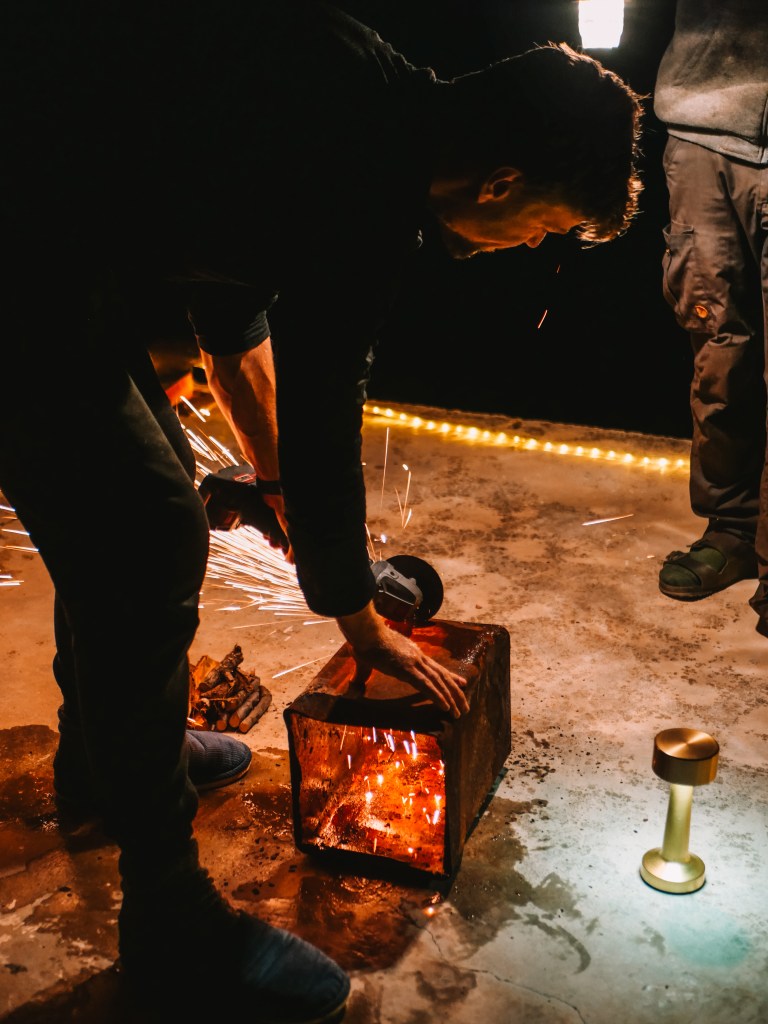
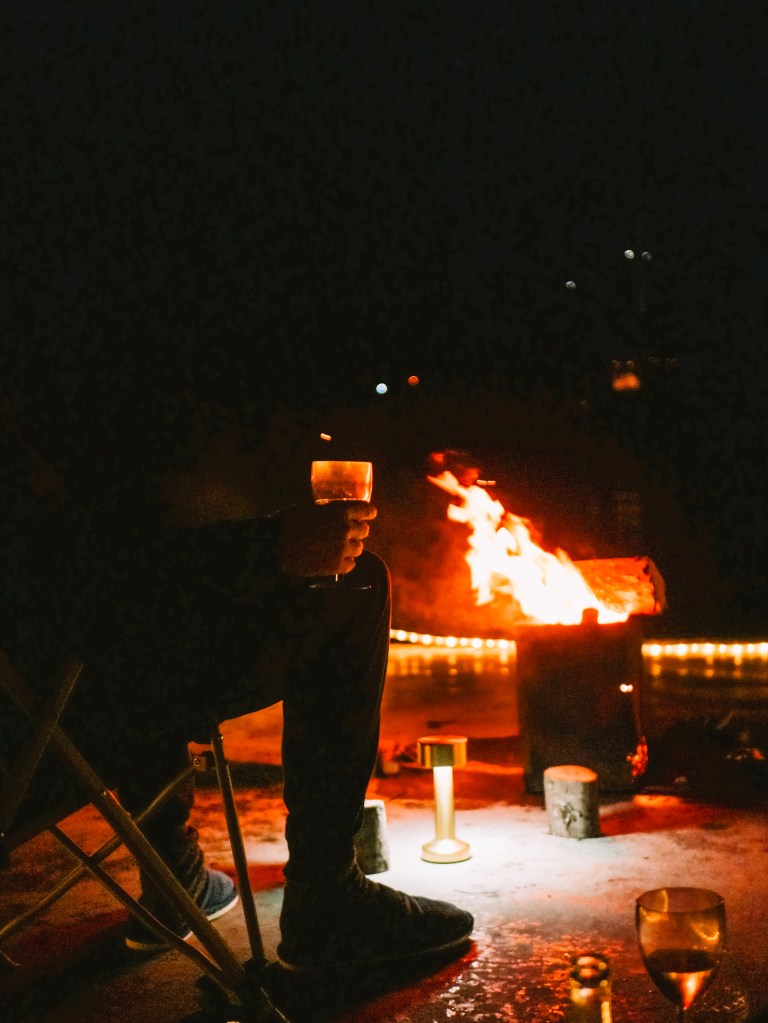
On land, when something wears out, it usually ends up in the trash. On a boat, it almost always finds a second use. Sailors become masters of creative recycling. Even the smallest things get a new life. An empty peanut butter jar becomes storage for screws. A cracked cutting board suddenly turns into a perfect backing plate for a piece of hardware. Old T-shirts become polishing cloths, and even a faded or unused chart becomes gift wrap. Even an olive oil can might be reborn as a tiny fire pit. Boaters look at things and see what they become, not just what they used to be. This creativity is just part of life on the water.
There is something satisfying about giving objects new life. Partly it is practical, because chandlers are not always close by. But partly it is about respect. When you live in a small floating world, you learn to appreciate every material around you. Nothing feels disposable. Even the odd bin of mismatched screws and fasteners eventually saves someone’s day. Sailors keep these collections almost like treasure chests.
Borrowing as a way of building trust
Borrowing in the sailing community is never seen as neediness. It is simply part of belonging. If you row over to a neighbour because you are missing a 10 millimeter socket, they usually hand it to you. This happens even before you finish explaining. Borrowing out here is relaxed and friendly. It happens so often that every anchorage has its own little stories about things being lent out. Sometimes the item comes back a few days later. Other times it takes a few weeks. Occasionally, it returns only when you mention that you’re leaving tomorrow. And it is rarely just tools or boat parts. Someone always has the missing ingredient when you realise halfway through cooking that your recipe needs coconut milk or a splash of tomato paste. A neighbour offers their jerrycan when you discover you misjudged your diesel supply. Someone else will lend you their sewing machine so you can finally fix that tired spray hood. Out here, sharing is simply how things get done.
The understanding is simple. If you help someone today, someone will help you tomorrow. Maybe the same person, maybe someone else entirely. The sea has a way of balancing things out.
Repairs that become social events
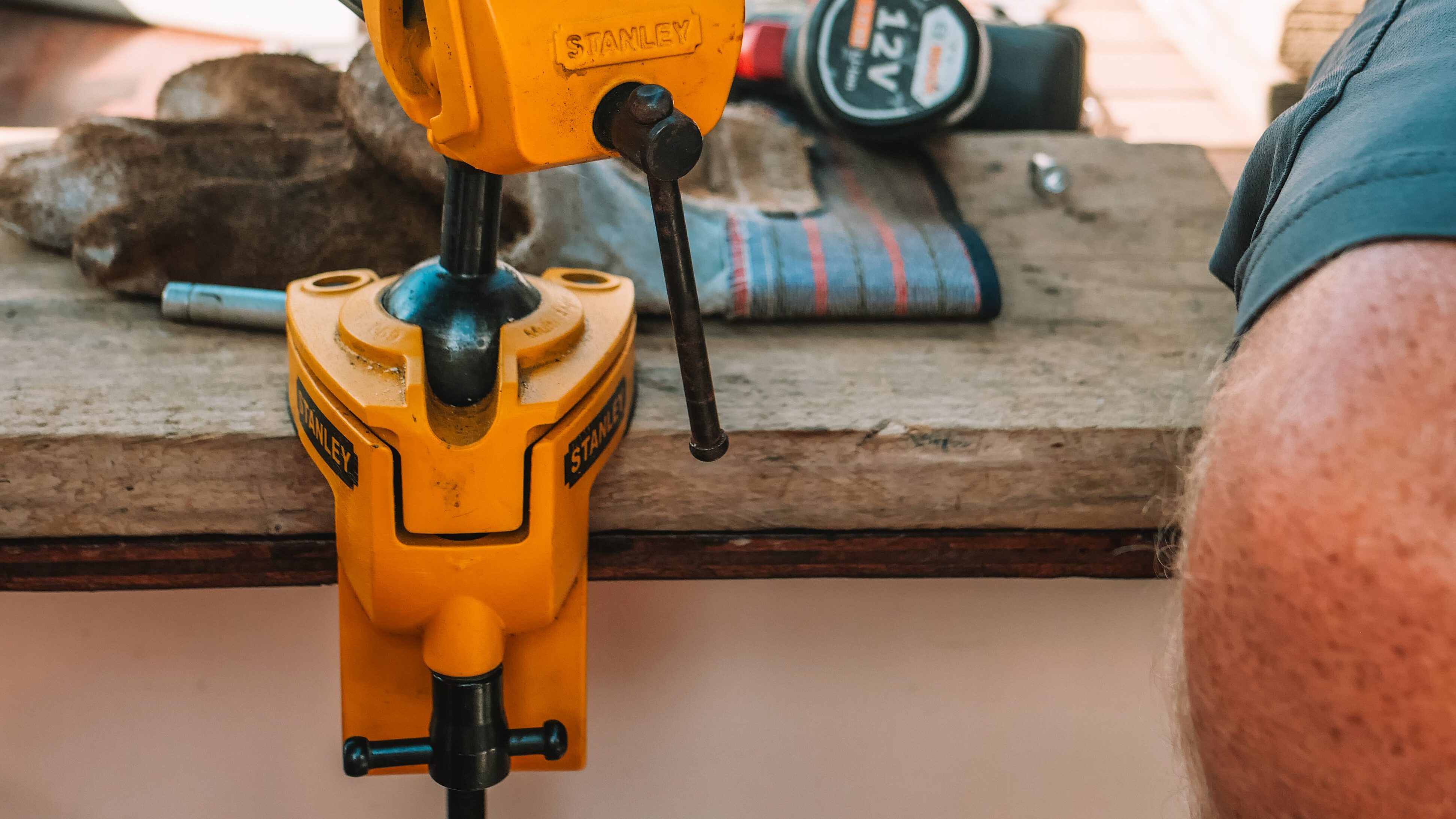
Boats like to break. It is almost a sport for them. A bilge pump decides to quit at sunset. A traveler block cracks in a gust. A piece of hardware drops its last screw into the ocean. Rarely does a repair stay private for long. The moment a sailor opens a toolbox in the cockpit, other dinghies start drifting over. People bring tools, knowledge, stories of similar disasters, and a healthy amount of curiosity. What begins as a chore often turns into a little gathering. Someone holds the flashlight. Someone mixes epoxy. Someone else shares a trick learned decades ago.
I remember one evening when we had to help to remove rivets from the gooseneck of a mast on another sailor’s boat. There were six of us, from three different boats, working together to help the couple out. It turned into such a fun night. By the time the repair was done, it felt less like a problem and more like a shared accomplishment.
Helping without making a big deal about it
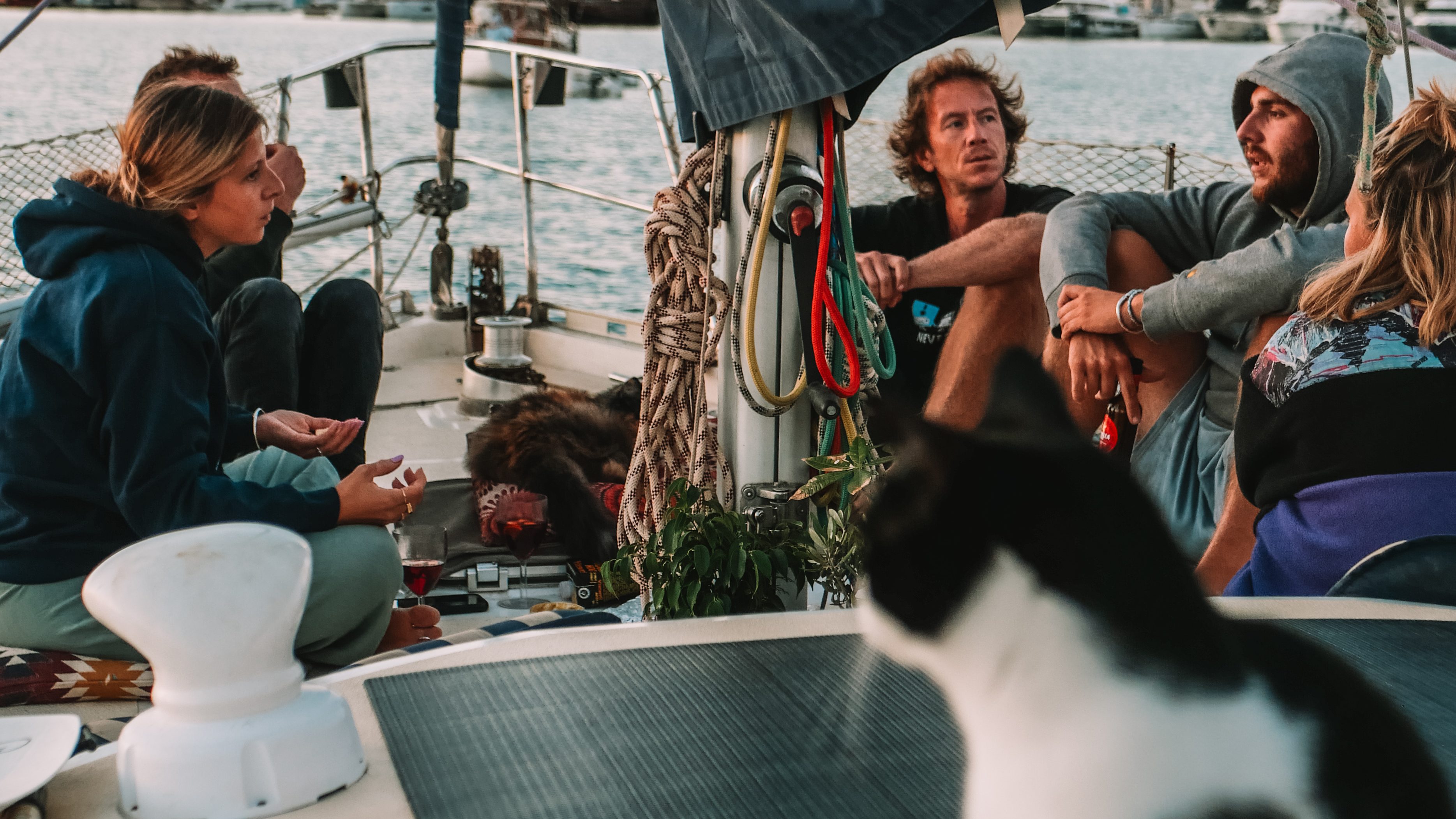
If there is one thing that defines sailors, it is how easily they look after one another. No one announces it, and no one expects thanks. It is simply what people do. When the wind rises in the middle of the night, sailors check each other’s anchors. When someone returns from a tough crossing, neighbours stop by with cake, cookies or warm bread. When a dinghy drifts past, someone quietly chases it down and ties it back on. Sometimes the help is small. Sharing weather routes. Lending charts. Giving someone a lift to shore. Sometimes the help is bigger. A tow from a boat with a stronger engine. A spare anchor. A hot meal after a storm. Space on board during an emergency.
Once, after an overnight passage, we pulled into a marina and were welcomed aboard by our neighbours for pasta carbonara. Those are the moments you never forget. All these gestures weave a web of support that stretches across oceans, connecting even total strangers.
Why this way of life matters
What makes the circular traveler so meaningful is that it reminds us of a different way to live. A way that slows down consumption. A way that values repair over replacement. A way that encourages connection instead of isolation. On land, people often rush, throw things away quickly, or hesitate to ask for help. On the water, none of that survives for long. The sea simplifies things. It shows us that we can live well with less, that we can support each other naturally, and that community grows out of shared challenges and small kindnesses.
At its heart, being a circular traveler is not about sustainability or frugality, although those things happen naturally. It is about people. It is about a group of individuals moving through the world in a way that feels meaningful and grounded.
Sailors know that life is unpredictable, and the weather does not care about your plans. So they help each other. They share what they have. They pass things along. They keep the circle moving. The world can use more of that. More re-using. More fixing. More helping. More trust. It would make life not only simpler but also richer, kinder, and a lot more connected.
Discover more from Sailing El Burro
Subscribe to get the latest posts sent to your email.
 Sailing El Burro